Minggu, 31 Oktober 2010

Nexus Two To Be First Native Android 2.3 Device


The Nexus One was the very first phone to get the upgrade to Android 2.2, so it makes sense that the Nexus Two will also be a flagship phone for a new Android operating system. If new reports are to be believed, it'll be the first to have Android 2.3, AKA Gingerbread, pre-installed.

The device, which was designed and manufactured by Samsung instead of HTC in collaboration with Google (like the Nexus One), will be officially unveiled November 8 at a pumped-up media event in Times Square. I4U will be on hand at the event to provide all the full details once they become official.

But for now, we're getting word that Android fans should be happy to hear. By incorporating Android 2.3, that would mean the new OS is complete and ready for deployment. Updates to existing Android phones should hopefully not be too far behind, even though most of us have just recently gotten the update to 2.2.

Other early details about the Nexus Two suggest it will have a 4-inch AMOLED or Super AMOLED display, a 1.2 GHz processor, 5 MP external camera and 1.3 MP front-facing camera, as well as 16 GB of internal storage and 512 MB of RAM.

It'll pack a powerful punch to the Android market, as those specs are more powerful than we've seen on any existing Android phone to date.

The Nexus One was well received in reviews among mobile enthusiasts, but due its lack of brick-and-mortar retail availability, and a very underwhelming marketing campaign, sales were abysmal. By placing Samsung, one of the most prolific Android supporters, at the helm of the Nexus Two project, it stands a much better shot at success.

Carriers for the phone haven't been officially detailed yet, but it's likely it will have the same carrier partner as the Nexus One - T-Mobile. Rumors suggest it might also be made available for AT&T.

Again, the Nexus Two will be officially christened at an exclusive, balls-out New York City spectacle, and we'll be there to get all the juicy details. Stay tuned.

AndroidAndMe. Via After Dawn. source i4u

Sabtu, 30 Oktober 2010

The Nook Color Might Be a Better Android Tablet Than We Thought

The Nook Color Might Be a Better Android Tablet Than We Thought

The Nook Color's built on top of Android, but seemed crippled in its potential to be a killer Android tablet by the way it'd run apps. Well, the reality is, it could be a solid little Android tablet after all.

At the Nook Color announcement, Barnes & Noble wasn't super clear about how apps and its own app store would work in relation to the larger Android ecosystem and Market. But now that we've talked to them about the development program a little more in depth, things look peachier.

Barnes & Noble is going to run their own app store for the Nook Color, distributing and selling applications. It's a "curated" experience, meaning they'll have to approve apps for the store, which developers can start submitting in "early 2011," with apps approved "within weeks" of submission. So the apps that we saw at the launch, like Pandora, is all that'll be available for a couple of months. (They won't disclose how they're splitting revenue with developers but said they're using a "familiar" scheme, so the standard 70/30 probably applies.)

The Nook Color won't run apps straight out of the Android Market, but that doesn't mean it can't run them—in fact, they've done a lot of tests on apps from standard Android smartphones and they "pretty much run on Nook Color," which has Android 2.1 under the hood. (The Nook's native interface and apps are just standard Android application layers.) Barnes & Noble's special Nook SDK runs on top of the standard Android one, and gives developers access to exclusive extensions and APIs for the Nook and its interface. So porting Android apps isn't difficult. B&N says it's more like "optimizing" them for Nook than porting them.

While Barnes & Noble really doesn't want the Nook Color "to be perceived as a multipurpose device," and their goal is to "extend the reading experience through applications," their definition of apps that do that is quite elastic. In fact, they don't have to be text-y at all. I posited a Netflix or other video service app, and B&N's Director of Developer Relations Claudia Romanini said they'd probably fly. "Is it attached to a book? Maybe not. But when I'm looking at content, I'm looking for multiple touch points. The fundamental question B&N is asking of apps is, "Woul
d that reading user be interested in consuming that content?"

Frankly, most of what I use my iPad for is reading—RSS, books, newspapers, email—and Netflix. If the Nook Color can deliver that in a slick way, well, that's all I really want out of an Android tablet, especially for $250. And given that it's plain ol' Android underneath, I won't be surprised when the more enterprising Android nerds make it capable of doing a lot of other things too.

Send an email to matt buchanan, the author of this post, at matt@gizmodo.com.

Source : Gizmodo

Barnes & Nobles Luncurkan Nook Color

CHIP-Online_Nook-Color

New York, CHIP.co.id – Nook Color meramaikan pasar tablet dunia. Diluncurkan Selasa lalu, 26/10/10, di Manhattan, New York, Amerika Serikat oleh jaringan toko buku besar Barnes & Nobles. E-reading tablet ini dapat membaca buku, majalah, koran dan buku anak-anak dengan fitur layar berwarna.

Nook Color yang memiliki ketebalan kurang dari 1/2 inci ini menawarkan fitur layar sentuh berwarna berukuran 7 inci dan dilengkapi memori 8 Gb yang mampu menyimpan sampai 6000 buku atau jika dikombinasikan sekitar 1.000 buku, 25 majalah, 10 surat kabar, 50 buku anak-anak, 500 lagu dan 150 foto. Jika kehabisan memori, Nook Color menyediakan slot untuk kartu memori MicroSD. Nook Color juga dilengkapi fasilitas Wi-Fi. Barnes & Nobles mengatakan produk ini juga akan dipasang fitur 3G seperti pada produk Nook sebelumnya.

CHIP-Online_Nook-Color-MicroSD

Selain aktivitas membaca, Nook Color juga dilengkapi fasilitas browsing internet namun tanpa dukungan Adobe Flash. Sambil membaca, pengguna Nook Color juga bisa mendengarkan musik melalui headphone jack, streaming radio dan bermain games. Bagi social media junkie, Nook Color juga menyediakan sarana berbagi dan update status.

Fitur Work on the Go memungkinkan pengguna Nook Color membuat, menyunting, dan melihat file Microsoft Office seperti Word, Excel dan PowerPoint. Nook Color juga dapat digunakan untuk mentransfer file PDF, ePub dan JPG untuk personalisasi wallpaper.

Buat pengguna Nook Color telah tersedia 2 juta judul buku dan beragam majalah. Barnes & nobles juga menawarkan aneka judul buku dan majalah interaktif untuk anak-anak .

Beberapa fasilitas menarik yang disediakan Barnes & Nobles adalah Lifetime Library. Fasilitas ini adalah perpustakaan pribadi tempat pengguna menyimpan buku yang dimiliki dan bisa dibaca di mana saja, kapan saja. Fasilitas lain adalah pengguna bisa saling pinjam meminjamkan buku tanpa biaya hingga 14 hari dengan teknologi LendMe antar sesama pengguna Nook Color.

Nook Color dijual seharga 249 dolar, sekitar setengah harga iPad Apple dan sekitar 100 dolar lebih mahal dari produk Nook berlayar hitam-putih yang dirilis tahun lalu. Barnes & Noble mengatakan pelanggan bisa langsung membeli Nook Color, yang didukung oleh software Android Google, sekitar 19 November 2010.

by Alexander Louiciano

Source : chip.co.id

Sabtu, 23 Oktober 2010

Liquidware Announces an Open Source Android Development Kit

Canton, MA (PRWEB) October 21, 2010

Liquidware, a leading open source engineering firm based in Boston, MA announced on Tuesday the availability of an open source hardware Android development platform. The Android Modular Gadget Platform is the first commercially available modular development kit based entirely on open source software and hardware reference designs. The Android Modular Gadget Platform is designed for rapid prototyping Android systems. The gadget platform is designed around 5 main modules, each of which can connect directly to each other to facilitate rapid development. Those modules include an organic LED (OLED) touchscreen, a high performance ARM carrier board, an extended capacity lithium ion battery, USB hub, and wireless G card module. When combined, these modules create a fully networked Android gadget capable of running any and all APK Android app files.


In 2010, Android grew from a small cell phone operating system into the preferred operating system for consumer and industrial design development. Today, thousands of hardware engineers and software developers have made Android their platform of choice for end-user applications.

Google's own development platform, the Nexus, was launched in 2008, and saw tremendous popularity amongst software developers. Since then, however, few development kits have been developed and launched.

"This presented a major problem for Android development," said Justin Huynh in an interview on Tuesday. "The current Android devices on the market are designed for software only applications. They're not designed to integrate into third party sensors, industrial control and automation systems, or medical devices."

"We built the Android Modular Gadget Platform to cater to rapid prototyping engineers and developers looking for the absolute fastest way to get a product proof-of-concept functional."

While Android has enjoyed rapid growth and successful adoption in the marketplace, it faces steep competition from Apple's iPad and iPhone operating system, as well as the newly announced Microsoft Windows 7 Mobile platform. However, Android's operating system is the only open source system, and therefore developers are choosing it over the proprietary options from Apple and Microsoft due to the availability of lost cost and free compilers and development tool chains.

"At Liquidware, we believe in the power of Open Source. Our customers are sophisticated, high end developers and advanced systems engineers. They demand the best, and most efficient tools available. Today, nothing beats a 100% fully open source development stack, which we're proud to deliver in the Android Modular Gadget Platform."

In the past, consumer gadget development platforms were delivered using closed source, proprietary systems. These cost $1,000-2,000 in software alone, and frequently ran on a limited subset of hardware. The integrated development environment was often error-prone, and buggy, and hardware development took months. Today, open source software tool chains and open source hardware reference designs have reduced out-of-pocket software costs to $100-200, and dropped hardware development timelines from months to weeks.

About Liquidware

Liquidware is one of the fastest growing engineering firms, specializing in high speed, lower power embedded systems product design, rapid prototyping of medical devices, parallel systems, and defense engineering.

Liquidware is also one of the most widely recognized organizations of Open Source Hardware hackers. Based in Boston, MA, Liquidware has three primary lines of business: high end medical device development, defense systems engineering, and Open Source Hardware design. Liquidware's hardware has been used by some of the world's leading research institutions, consumer product firms, and is deployed in field operations worldwide.

Trademarks
OMAP and Beagle Board are trademarks of Texas Instruments. ARM is a trademark of ARM Limited. All
other trademarks and registered trademarks are the property of their respective owners.

Editorial Contact for Liquidware
Justin Huynh
Liquidware, Press Manager
(646) 835-9728
justin(dot)huynh(at)liquidware(dot)com
www.liquidware.com


Read more: http://www.sfgate.com/cgi-bin/article.cgi?f=/g/a/2010/10/21/prwebprweb4675724.DTL#ixzz13AxPvlcJ


Introducing the DIY Android Gadget Starter Kit

This past weekend, Chris and I hacked Android onto the Beagleboard Embedded Gadget Pack. It was the culmination of about 3 weeks worth of working straight through, sleeping very little, and consuming many ASCII bunsen burner Red Bull's :-) The result is the DIY Android Gadget Starter Kit, which includes everything anyone would want or need to get started programming Android hardware and software applications, and to make a custom Android device.

Here's a picture of the Android DIY kit assembled:
The DIY Android Modular Gadget development kit uses the same base modules as the Open SciCal, which got written up on Wired (thanks!), and also as the Embedded Beagleboard Gadget Pack, which has been really popular with embedded systems engineers:
This is a nice perspective shot of the Android home menu, where the apps are typically stored and can be launched. The settings menu and options are fully functional, and the system comes preloaded with SL4A, a high performance scripting language that lets programmers write GUI's in Perl or Python (and a handful of other scripting languages):
Justin uploaded all of the modules, components, and preprogrammed SD cards onto the Liquidware shop over here... and here.

Source : Antipastohw

Selasa, 19 Oktober 2010

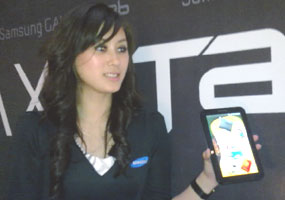
Gandeng Indosat, Galaxy Tab Dibanderol Rp 6 Juta-an Gandeng Indosat, Galaxy Tab Dibanderol Rp 6 Juta-an


Jakarta - Galaxy Tab akhirnya secara resmi mendarat di Indonesia. Tablet PC berukuran 7 inchi itu pun bakal dipasarkan pada kisaran harga Rp 6 juta-an, termasuk paket internet yang ditawarkan Indosat.

"Samsung Galaxy Tab sudah bisa didapat mulai 30 Oktober. Dengan harga Rp 6,9 juta pengguna sudah mendapatkan paket unlimited Indosat selama 6 bulan," Eka Anwar Head of marketing HHP Business, Samsung Electronics Indonesia di Ritz Carlton, Selasa (19/10/2010).

Sementara itu, meski dipaketkan pada layanan Indosat namun Samsung mengaku pengguna masih bisa menggunakan operator lainnya. Untuk menggunkan akses data, atau sekadar melakukan panggilan.

"Selama periode peluncurannya, kita memang bekerjasama dengan Indosat. Namun user masih bisa menggukan kartu dari operator lain. Tapi nantinya bakal dikenakan tarif data reguler," jelas Eka.

Galaxy Tab, diklaim Samsung sebagai tablet PC Android pertama yang menggunakan layar 7 inchi. Dengan segudang fitur yang dibawanya, produk ini diklaim bakal bisa mengalahkan rival utamanya, iPad. ( eno / wsh )

Rabu, 13 Oktober 2010

Android OS Keeps Gaining Momentum: 10 Reasons Why

News Analysis: Google's Android OS is more attractive than ever. It's a hit with smartphone buyers and makers, and Google is making moves that will keep the mobile operating system on a roll.

Google's Android operating system is easily besting the competition in today's mobile market. In fact, the company's operating system, which runs on several devices from a number of vendors, is outselling Apple's iPhone, RIM's BlackBerry and other products that haven't been able to captivate audiences as effectively as it has.

And now with Windows Phone 7 out of the bag, it's clear that Google's operating system will only grow even more rapidly. Microsoft's operating system lacks the key features that most consumers really want, and it's arguably going to fall even further behind due to the limitations in its functionality.

Google's Android OS has what it takes to succeed. The mobile operating system is on a roll, and it doesn't look like there is anything out there to put a brake on its momentum.

Here's why:

1. Android 2.2 keeps coming

When Google first offered Android OS, it was a mess. The operating system didn't work the way consumers had hoped, and Apple's iOS looked all the better. But Google improved the mobile operating system with each new update. Android 2.2, for example, is easily the best version of the software ever released. That's why it's coming to more devices. As that continues, it will be harder for consumers to opt for an alternative.

2. Android 3.0 is right around the corner

As good as Android 2.2 is, Google is planning to offer Android 3.0 in the coming months. Most estimates peg the release date at early 2011. When that software is released, it will likely include several updates that will make it even more appealing to customers. Considering Android 2.1 and Android 2.2 have been such successes, it's hard to see why Android 3.0 won't be as well.

3. Tablets are starting to adopt it

With Apple's iPad setting the sales standard in the tablet market, other vendors that want to run Android OS are starting to fall into place. Currently, Cisco, LG, Samsung and others plan to introduce Android-based tablets in the coming months. That's good news for Google, and it will likely only help the company's mobile operating system take the lead in the space.

4. It's becoming more enterprise-focused

Google is finally starting to realize that in order to be successful in the mobile market, getting the enterprise into the mix is extremely important. So the company is starting to make inroads into the corporate world. Android 2.2 is widely considered by people who have evaluated it as the most enterprise-friendly mobile operating system Google has ever released. Going forward, Google will likely continue to make a push for the enterprise. That should only make its software that much more appealing.

5. Windows Phone 7 looks to be a failure

Windows Phone 7 is arguably Google's biggest competition in the mobile OS space. The new operating system from Microsoft attempts to attract vendors and beat Google at its own game: selling a slew of devices to consumers around the world. But Windows Phone 7 lacks full multitasking, apps and a number of other features consumers want. And it will likely be viewed as the other operating system when it launches in the U.S. next month.

6. Apple isn’t powerful anymore

Apple might still be a major player in the mobile market, and it's a company that should be respected. But Google has shown that it can beat Apple at its own game. Granted, the company had to do it with several devices against one, but it did it nonetheless. It has proved to the industry that it can beat Apple without much trouble.

7. Verizon has doubled down

The only way an operating system is going to be successful is if major carriers get behind it. Luckily for Google and its vendor partners, that is exactly what has happened. Verizon has been extremely successful in its support for Android. And it has made every indication that it will continue to support the operating system going forward. Considering Verizon is the top carrier in the United States, that's a good thing.

8. Google has real focus

When Google first started marketing Android OS, the company's intentions were unknown. It was still heavily invested in the search and advertising markets, and it wasn't clear how dedicated it really was to mobile technology. But it's clear now. And Android OS has become a key component in Google's strategy. That's good news for the company's partners. And it will likely only help the search giant.

9. More vendors are joining in

Motorola's and HTC's success with Android has caused some companies to take notice of Google's operating system. As a result, Google is seeing several new vendors start opting for its operating system over others. For example, Dell's Streak tablet and Aero smartphone both run Android OS. For consumers, the more options available, the better.

10. The Android Market is growing

Apple's App Store has spurred an entirely new industry in the mobile market. But Google's Android Market, which admittedly has far fewer applications than Apple's store, has been gaining ground. In fact, it currently has most of the top applications available in Apple's marketplace for sale or free download in its store. That only adds to the value of Android OS, and it will make it all the more appealing in the future.

By: Don Reisinger

source : eweek


Minggu, 10 Oktober 2010

Adobe AIR Now Available for Android PhonesAdobe AIR Now Available for Android Phones

Adobe Flash Platform - BannerIf you run a desktop Twitter client, you're probably familiar with Adobe AIR, an application framework and runtime environment that allows developers to write an app and have it instantly portable to multiple operating systems. Now, Adobe has announced that AIR is available for Android mobile phones as well, giving app developers another way to code apps that will work in Android.

The news doesn't mean that all of your desktop AIR apps like your favorite Twitter client or RSS feed reader will work instantly on your Android device however. App developers will have to use Adobe's Flash Builder or Flash Professional to develop AIR apps for Android. The list of AIR-enabled apps for Android isn't very long yet, but as more developers sign up to get the AIR developer tools for Android, it's likely the list will grow.

Developers who want to use the AIR platform to build apps for Android will need to have a handset running Android 2.2 "Froyo" or later, and will have the option to port their existing code or build code from scratch using Flash or AIR tools. In either case, developer code will have to be heavily modified to run on mobile devices that have significantly less system resources than a desktop or laptop.

AIR for Android works similarly to AIR for Mac OS and Windows; if you try to install an app that requires the AIR framework you'll be prompted to install it first. In fact, apps that use AIR are already beginning to appear in the Android App Market, and there's a short list over at Adobe's AIR for Android page. Most of the apps so far are simple games, instructional or educational apps, and a few entertainment apps with relatively simple features.

Even so, the fact that AIR exists for Android gives developers another way to build applications for Android without using Google's native Android toolset, and gives developers a way to quickly and easily release versions of their apps for desktop operating systems and for Android in one round, all using tools their developers are likely already familiar with.

source : appscout

Kamis, 07 Oktober 2010

Sony Ericsson LiveView : Aksesoris Pintar untuk Ponsel Android Anda

Chip Online - Sony Ericsson LiveView

Jakarta, CHIP.co.id – Sony Ericsson meluncurkan (28/9) Sony Ericsson LiveView. Melihat trend gaya hidup masyarakat yang sudah berubah, Sony Ericsson memanfaatkannya untuk mengeluarkan produk baru. Saat ini kegunaan ponsel bagi sebagian besar manusia di muka bumi, sudahlah menjadi kebutuhan pokok, rasanya hidup tidak lebih hidup tanpa menggenggam dan mengutak-utik ponsel hanya sekedar untuk menelepon, sms, mendengarkan musik dan update status jejaring sosial.

Jika kita lihat ukuran aksesori ini 3.5 x 3.5 x 1.1 cm, sedikit mengingatkan Anda akan perangkat iPod Nano generasi ke-6 yang sama-sama berukuran mini. Namun Sony Ericsson menjelaskan lebih lanjut kegunaan perangkat mini ini sebagai salah satu aksesoris yang dapat berguna di ponsel Anda.

Tidak seperti iPod Nano, Sony Ericsson LiveView sudah kompatibel dengan platform Android 2.0 ke atas, memiliki fungsi praktis untuk membaca sms, melihat panggilan masuk, update status dan mendapatkan informasi terbaru dari Facebook dan Twitter, memainkan musik langsung dari perangkat mungil ini.

Chip Online - Sony Ericsson LiveView

Selain itu, yang membuat Sony Ericsson LiveView ini spesial adalah, penggunaan konektivitas Bluetooth sebagai sambungan nirkabel dari ponsel yang kompatibel langsung digunakan untuk mengontrol ponsel tanpa harus mengeluarkannya dari saku ataupun tas Anda, karena aksesoris ini sudah didesain sepraktis mungkin untuk dijepitkan di mana saja, dijepitkan pada laptop, dijadikan gantungan kunci lalu sematkan Sony Ericsson LiveView Anda di tali jam tangan Anda dan jadikannya Jam Tangan trendy.

Bagi Anda yang tertarik untuk memiliki perangkat ini, diharapkan kesabarannya karena Sony Ericsson Indonesia akan segera mendatangkannya mulai kuartal ke-4 tahun 2010. “Sony Ericsson LiveView adalah aksesoris Sony Ericsson pertama yang kompatibel dengan platform Android yang terbuka. Hal ini tentunya memberikan kesempatan bagi para konsumen untuk menjadi kreatif dan wajib untuk dimiliki,” ujar Djunadi Satrio, Head of Marketing Sony Ericsson Indonesia.